Best Graphics Cards
Find the best GPUs for gaming and creative work.
ASUS Dual RTX 5060 Ti 16GB GDDR7

- ✓767 AI TOPS with Blackwell architecture
- ✓2632 MHz boost clock in OC mode
- ✓Axial-tech cooling with dual fans

ASUS Dual RTX 5060 Ti 16GB GDDR7
- ✓767 AI TOPS with Blackwell architecture
- ✓2632 MHz boost clock in OC mode
- ✓Axial-tech cooling with dual fans
ASUS Dual RTX 3050 6GB OC

- ✓6GB GDDR6 memory for 1080p gaming
- ✓Axial-tech fans with smaller blade design
- ✓2-slot compact form factor for any build
ASUS Dual RTX 3050 6GB OC
- ✓6GB GDDR6 memory for 1080p gaming
- ✓Axial-tech fans with smaller blade design
- ✓2-slot compact form factor for any build
GIGABYTE Radeon RX 9060 XT 16GB Gaming OC

- ✓RX 9060 XT architecture with 16GB GDDR6 memory
- ✓WINDFORCE cooling with triple hawk fans
- ✓RGB lighting with server-grade thermal gel
GIGABYTE Radeon RX 9060 XT 16GB Gaming OC
- ✓RX 9060 XT architecture with 16GB GDDR6 memory
- ✓WINDFORCE cooling with triple hawk fans
- ✓RGB lighting with server-grade thermal gel
GIGABYTE RTX 5060 WINDFORCE OC 8GB

- ✓NVIDIA Blackwell architecture with DLSS 4
- ✓8GB GDDR7 memory on 128-bit interface
- ✓WINDFORCE cooling with PCIe 5.0 support
GIGABYTE RTX 5060 WINDFORCE OC 8GB
- ✓NVIDIA Blackwell architecture with DLSS 4
- ✓8GB GDDR7 memory on 128-bit interface
- ✓WINDFORCE cooling with PCIe 5.0 support
GIGABYTE RTX 5070 WINDFORCE OC 12GB
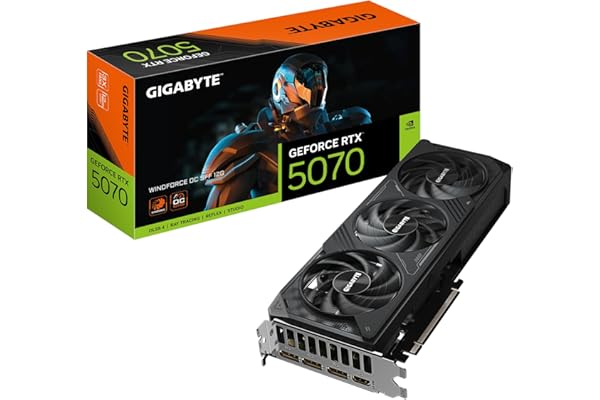
- ✓12GB GDDR7 with 192-bit memory interface
- ✓NVIDIA Blackwell architecture with DLSS 4
- ✓PCIe 5.0 compact form factor design
GIGABYTE RTX 5070 WINDFORCE OC 12GB
- ✓12GB GDDR7 with 192-bit memory interface
- ✓NVIDIA Blackwell architecture with DLSS 4
- ✓PCIe 5.0 compact form factor design
XFX Radeon RX 7900XT 20GB Graphics Card

- ✓20GB GDDR6 memory for 4K gaming
- ✓2400 MHz boost clock for high performance
- ✓Triple fan cooling with AMD design
XFX Radeon RX 7900XT 20GB Graphics Card
- ✓20GB GDDR6 memory for 4K gaming
- ✓2400 MHz boost clock for high performance
- ✓Triple fan cooling with AMD design
ASRock Radeon RX 9070 XT Challenger 16GB
- ✓64 compute units with RDNA 4 architecture
- ✓3rd Gen Ray Tracing for realistic visuals
- ✓16GB GDDR6 memory with OC support
ASRock Radeon RX 9070 XT Challenger 16GB
- ✓64 compute units with RDNA 4 architecture
- ✓3rd Gen Ray Tracing for realistic visuals
- ✓16GB GDDR6 memory with OC support
ASUS Dual RTX 5060 8GB GDDR7 OC
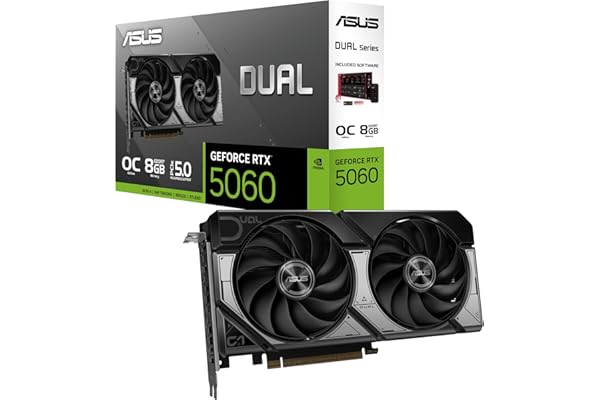
- ✓623 AI TOPS with Blackwell architecture
- ✓2565 MHz boost clock in OC mode
- ✓Axial-tech cooling for compact builds
ASUS Dual RTX 5060 8GB GDDR7 OC
- ✓623 AI TOPS with Blackwell architecture
- ✓2565 MHz boost clock in OC mode
- ✓Axial-tech cooling for compact builds
ASUS GeForce RTX 5070 SFF
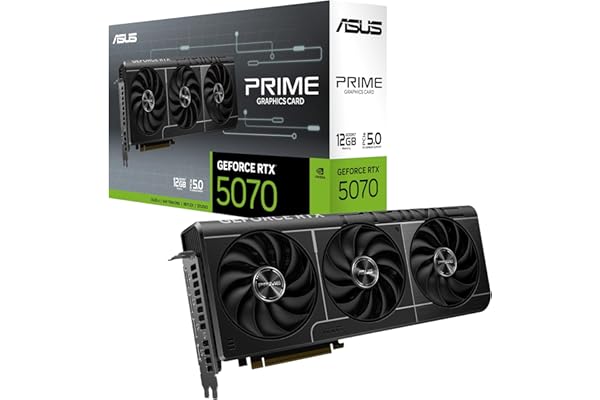
- ✓NVIDIA Blackwell architecture with DLSS 4
- ✓Compact design fits small-form-factor builds
- ✓Axial-tech fans with optimized cooling
ASUS GeForce RTX 5070 SFF
- ✓NVIDIA Blackwell architecture with DLSS 4
- ✓Compact design fits small-form-factor builds
- ✓Axial-tech fans with optimized cooling
ASUS TUF RTX 5090 32GB OC
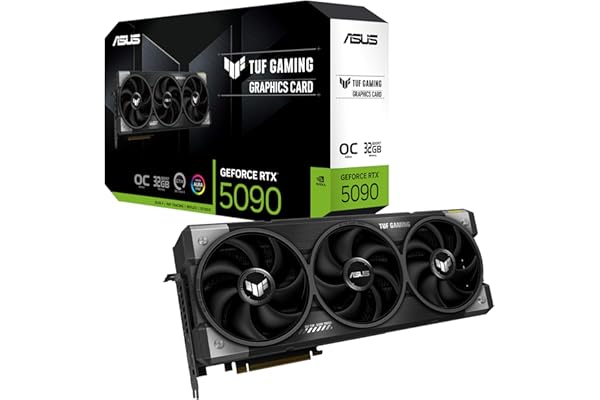
- ✓32GB GDDR7 with Blackwell architecture
- ✓Military-grade components for extended durability
- ✓Protective PCB coating against shorts
ASUS TUF RTX 5090 32GB OC
- ✓32GB GDDR7 with Blackwell architecture
- ✓Military-grade components for extended durability
- ✓Protective PCB coating against shorts
Buyer's Guide
Performance Tier & Resolution Target
Match the GPU to your monitor and workload. The RTX 3050 6GB handles 1080p gaming at medium-high settings (60fps), while mid-range cards like the RTX 5060 (8GB) and RX 9060 XT (16GB) target 1440p high settings. High-end options like the RTX 5070 (12GB) and RX 7900XT (20GB) push 4K gaming and accelerate 3D rendering. Creative professionals should prioritize VRAM—16GB minimum for 4K video editing, 20GB for complex 3D scenes.
VRAM Capacity
More VRAM future-proofs your investment and enables higher texture quality. 6-8GB suffices for 1080p, but modern AAA titles at 1440p increasingly demand 12GB+. The RX 9060 XT's 16GB and RX 7900XT's 20GB provide headroom for high-resolution texture packs and professional workflows like machine learning or large Photoshop projects. Budget cards with 6GB will struggle with newer games within 2 years.
Ray Tracing & Upscaling Technology
NVIDIA's RTX 50-series offers superior ray tracing performance and DLSS 3.5 upscaling versus AMD's FSR 3. Expect 20-40% better RT framerates on RTX 5060/5070 compared to equivalent Radeon cards. However, AMD delivers better rasterization price-per-frame—the RX 7900XT often outperforms the RTX 5070 in non-RT games. Evaluate whether your favorite titles support and benefit from RT before paying the NVIDIA premium.
Power & Cooling Requirements
Verify your PSU meets the card's requirement: budget GPUs need 450-550W, while the RX 7900XT demands 750W+. Triple-fan designs (WINDFORCE, Gaming OC) run 5-10°C cooler and quieter than dual-fan cards under load. Check case clearance—high-end cards exceed 300mm length. Factor in electricity costs: the RX 7900XT draws 315W versus RTX 5070's 220W, adding $30-50 annually at typical gaming hours.